Madrid celebrates as Spain secures World Cup title; Argentina faces scrutiny

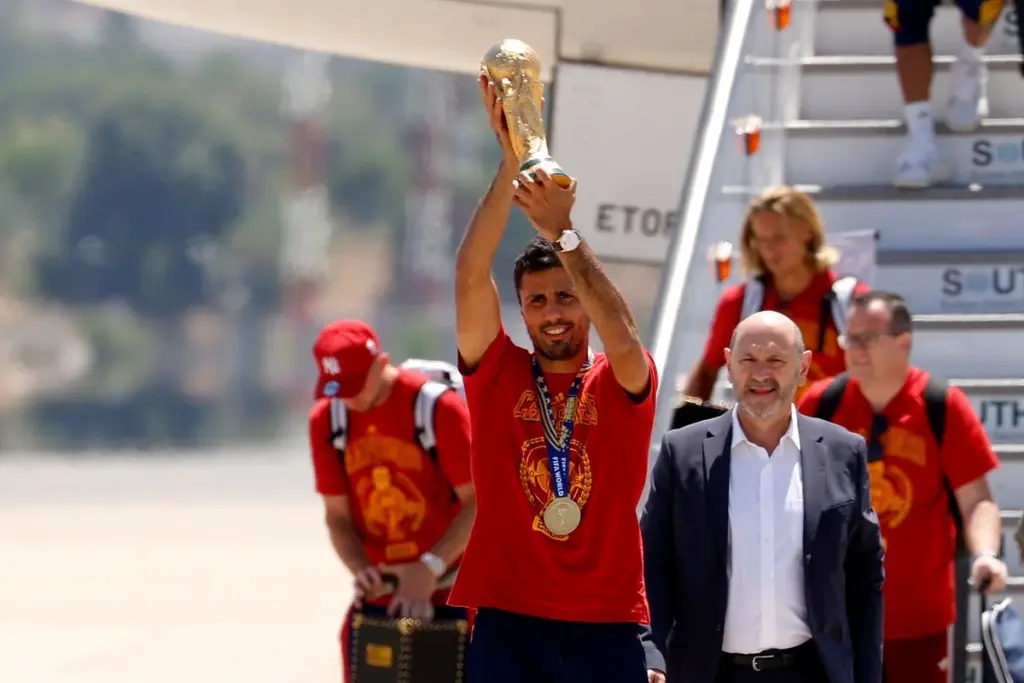
Spain has returned to Madrid to a celebratory welcome following their World Cup triumph, a victory marked by Ferran Torres’ decisive goal. The team’s second men’s World Cup win was met with jubilation in Spain, contrasting sharply with the reception awaiting Argentina, whose performance and post-match conduct have drawn considerable criticism.
The final match, which saw Spain defeat Argentina 1-0, was described as a bizarre and at times deeply unusual spectacle. Spain secured the breakthrough when Torres scored at the beginning of the second half of extra time. This outcome denied Lionel Messi a World Cup title in what was likely his final appearance in the tournament, with the aftermath further souring the occasion for the football icon.
Spain’s Triumph and Public Reaction
Spain’s national newspapers were filled with joy, celebrating the country’s second World Cup triumph. Headlines reflected the widespread elation, with one proclaiming, “The world is ours,” and another stating, “The world surrenders to Spain.” Other publications highlighted Spain’s “invincible” status, noting their 38-game unbeaten run in international football, and referred to the team as “double champions” and “superstars.”
The victorious Spanish squad arrived back in Madrid to prepare for an extravagant trophy parade through the capital’s streets. The parade was scheduled to begin at 7pm local time (6pm BST) after the players’ plane landed at Adolfo Suárez Madrid–Barajas Airport around 2:30pm. Before the public celebrations, the players, coaching staff, and federation officials were taken to a secure location for lunch.
Argentina’s Disappointing Display and Disciplinary Concerns
In stark contrast, Argentina’s team faced scrutiny for their performance and behavior. Despite the 1-0 loss, Argentina’s national media attempted to defend their team, with headlines such as “They gave it their all, nothing to blame them for” and “Argentina gave it their all – and they’re a source of national pride.” One paper used the headline “May they be eternal” alongside a tearful image of Messi.
However, the team’s display was characterized by a lack of offensive threat and significant ill-discipline. Argentina did not register a shot in normal time and failed to have an effort on target throughout the entire 120 minutes of the match. The ill-discipline was evident with Enzo Fernandez receiving two yellow cards, one for dissent and another for a clumsy challenge. Leandro Paredes was also sent off after the game for his angry reaction at the final whistle, and Nahuel Molina was involved in confrontations with Spain players.
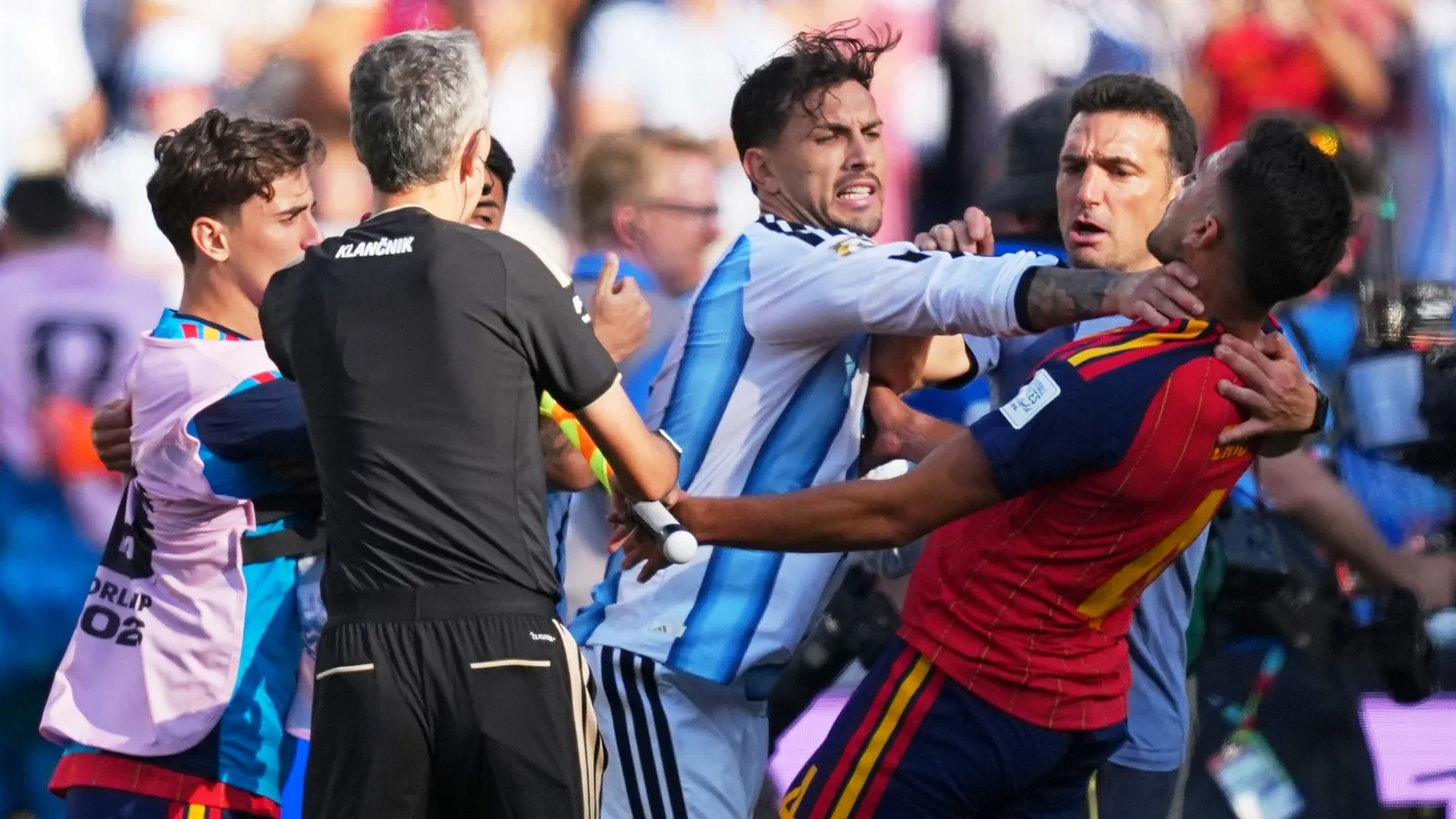
Commentator Gary Neville remarked on Paredes’ conduct, stating, “I love the competitiveness of the Argentines but Paredes has been a disgrace the last couple of games.” The post-match scenes, which included a brawl, are set to be investigated by Fifa to determine if additional disciplinary action is warranted. Fifa’s code allows for disciplinary measures against a national association if a team conducts itself improperly, such as when individual disciplinary sanctions are imposed on five or more players during a match. Argentina’s actions could also be seen as bringing the sport into disrepute, potentially leading to further penalties.
Tournament Reflections and Viewing Figures
The World Cup final garnered significant viewership. Spain’s victory over Argentina attracted a peak audience of 15.8 million on one broadcasting platform, with an average of 13.9 million viewers watching Ferran Torres’ extra-time goal. The final was also streamed 11.1 million times on various digital platforms, including 2.4 million UHD streams.
The tournament as a whole saw substantial engagement, with live text coverage viewed over 18.8 million times. World Cup matches were streamed 237 million times, more than double the figures from the 2022 World Cup. Football content accounted for 33% of all streaming on one particular platform during the competition. Additionally, a sports website and app attracted 57.2 million unique visitors, with content viewed 1.7 billion times. Match highlights were streamed 67.3 million times, and a new football YouTube channel generated 100 million views. Social media clips, interviews, analysis, press conferences, and fan moments collectively attracted 2.55 billion video views, with one video of Egypt winger Mostafa Zico’s interview after Egypt’s elimination by Argentina reaching 77 million views on one social media platform alone.
Read Also
Source: skysports.com

