FIFA warns Super Eagles on World Cup 2030 qualification, emphasizes stable structure

Super Eagles’ World Cup Aspirations and Recent Misses
The Super Eagles have received a caution from FIFA regarding their qualification chances for the World Cup 2030. The global football governing body indicated that while Nigeria possesses abundant talent, a stable and effective football structure is crucial for the team’s return to the tournament. FIFA’s assessment highlighted that consistent performance, rather than just player quality, will determine Nigeria’s qualification.
Nigeria has a history of reaching the Round of 16 in three of its six World Cup appearances, specifically in 1994, 1998, and 2014. However, the team did not qualify for the 2022 and 2026 editions of the tournament. During the 2026 qualifying campaign, Nigeria finished second in Group C of the African qualifiers, behind South Africa. This result allowed them to proceed to the second round, which determined Africa’s representative for the intercontinental play-offs.
In the subsequent stages, Nigeria defeated Gabon with a 4-1 score after extra time. However, they faced a decisive match against the Democratic Republic of Congo, which ended in a 1-1 draw and was ultimately lost on penalties. Despite these setbacks, FIFA acknowledged Nigeria’s status as a major football nation in Africa, attributing this to its extensive pool of talent.
Focus on Stability for Future Success
FIFA’s review of the Super Eagles’ World Cup history and their failure to qualify for the 2026 tournament underscored the need for structural improvements. The organization emphasized that Nigeria’s potential remains significant due to its footballing production line. However, to qualify for the 2030 tournament, the focus must shift from solely relying on individual ability to establishing a robust and stable structure that can foster reliable performances.
The Super Eagles recently congratulated Spain on their victory in the 2026 World Cup, where Spain defeated Argentina 1-0 in the final. In a social media post, the Nigerian team expressed their congratulations and hinted at their ambition to participate in the next World Cup, which is scheduled to be held in Spain, Portugal, and Morocco. This aspiration comes after Nigeria’s longest absence from the tournament since their debut in 1994, having missed the 2022 and 2026 editions.
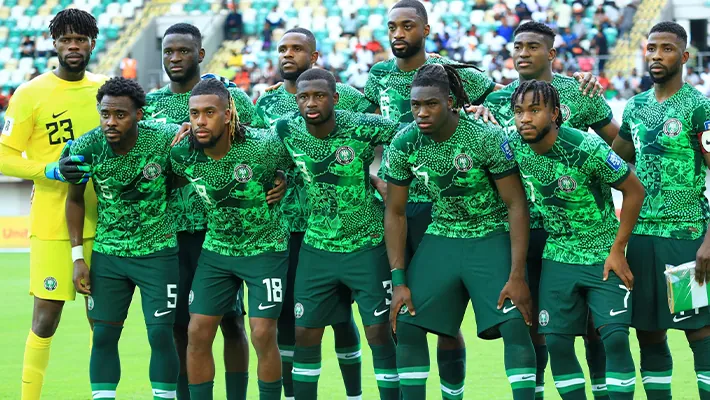
The team’s failure to qualify for the 2022 World Cup occurred after losing to Ghana in the play-offs based on the away goal rule. For the 2026 edition, Nigeria initially lost the automatic qualification spot to South Africa. They then had a second opportunity in the African Play-off for the competition but were defeated by the DR Congo. The Leopards of DR Congo subsequently represented Africa in the intercontinental play-offs, securing a World Cup ticket after beating Jamaica earlier in the year.
Path to World Cup 2030
The message from FIFA is clear: while talent is undeniable, it is insufficient on its own. The path for the Super Eagles to return to the World Cup in 2030 will depend on addressing the instability that has prevented the national team from consistently delivering results. Building a system that can produce steady performances is paramount for Nigeria’s future success in international football.
The Super Eagles’ social media post, stating “See you in 2030,” reflects their determination to qualify for the upcoming tournament. This ambition aligns with FIFA’s guidance, suggesting that a concerted effort towards structural stability will be key in achieving their goal of participating in the 2030 World Cup.
The 2026 World Cup final saw Ferran Torres score an extra-time winner for Spain against Argentina.
Read Also
Source: pmnewsnigeria.com

