World Cup 2026 final offers record prize money for Spain or Argentina

Record Prize Money for World Cup Finalists
The 2026 World Cup final is set to offer a record amount of prize money, with the champion receiving a substantial sum. Either Spain or Argentina will claim the top prize, alongside the championship title and global recognition. For Spain, this presents an opportunity to secure their second World Cup title, while Argentina could potentially win their second consecutive title and their fourth overall championship.
The winning team in the final will be awarded $50 million. The runner-up will receive $33 million. The prize money structure extends to all participating teams, with those placing third and fourth receiving $29 million and $27 million, respectively. Teams finishing between 5th and 8th place will each get $19 million, while those in 9th to 16th place will receive $15 million. Teams ranked 17th to 32nd will take home $11 million, and those in 33rd to 48th place will receive $9 million.
FIFA’s Financial Growth and Tournament Expansion
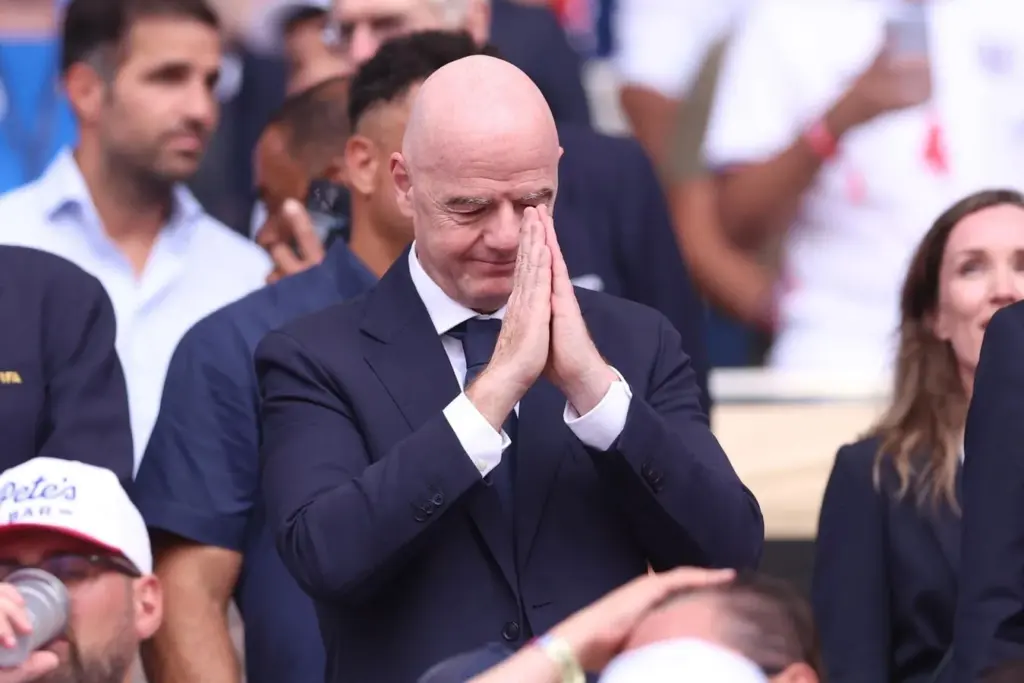
FIFA has experienced significant financial growth, with its president, Gianni Infantino, publicly forecasting the 2026 World Cup to be the first $10 billion sporting event in history. This projection would double the revenue generated from the World Cup in Qatar. The tournament, co-hosted across the United States, Mexico, and Canada, has opened new avenues for revenue, driven by an expanded 104-game tournament and increased commercial and broadcast rights.
The financial success of the World Cup is attributed to factors such as limited supply meeting high demand, according to Professor Rob Wilson, Dean at the University Campus of Football Business (UCFB) in the UK. The tournament’s predominant presence in the United States, hosting 78 of the 104 games, including all matches after the round of 16, provided a significant opportunity for financial gain. Ticket prices were adjusted in a market accustomed to paying premium sums for sporting events, drawing a cumulative attendance of over six million.
FIFA’s financial reports for 2022 showed revenues of nearly $5.8 billion, marking an unmatched financial achievement. This figure significantly surpassed the revenues from previous tournaments like Russia 2018 and Brazil 2014, and was almost double the amount generated in South Africa. The expanded tournament, featuring 48 teams instead of 32 and an additional 40 matches, has contributed to this rapid growth, alongside a greater availability of tickets.
The commercial success has also been fueled by new partnerships. Major commercial partners such as Adidas, Coca-Cola, Visa, Aramco, and Hyundai contribute between $80 million and $100 million annually through long-term deals. Additionally, this World Cup features sponsors like Bank of America and McDonald’s, who have paid as much as $100 million for their association. There are also 14 ‘supporters’, including Home Depot and American Airlines.
Global Appeal and Audience Engagement
The World Cup’s global appeal continues to attract brands. AB InBev, a major brewing company, extended its partnership with FIFA through to 2030 just before this tournament. FIFA views marketing rights as a primary area for future growth, with commercial revenues having nearly quadrupled since the 2007-10 cycle. Phil Carling, managing director of football at Octagon, an international sports and entertainment agency, highlights the immense scale of football as both a sport and a cultural phenomenon, calling the World Cup a global mega-event without parallel.
Audience engagement has been a key factor, with FIFA estimating that six billion people would follow this tournament. Independent television viewing figures confirm the growing interest in the men’s World Cup. New markets have shown significant engagement, including the United States, where the USMNT’s last-16 exit to Belgium was watched by a record 30 million viewers on a domestic broadcaster. In Canada, a defeat to Morocco at the same stage drew an average of 5.4 million viewers, reportedly the largest audience for a Canada game on record.
European countries, such as Portugal and Norway, have also seen audiences approaching half of their populations. A FIFA release indicated that Sweden’s opening group game against Tunisia captured a 96 percent share of the domestic television audience, although the early morning kick-off time in Sweden may have contributed to this near-monopoly.
Read Also
- Aberdeen hosts Team Nigeria's final preparations for Glasgow 2026 Commonwealth Games
- England coach Thomas Tuchel delivers message to players after World Cup semi-final defeat
- England urged to retain Thomas Tuchel despite World Cup exit, unless Pep Guardiola is available
- North London club eyes Aston Villa defender as Saliba faces injury assessment
Source: eu.usatoday.com

