Six nations secure automatic qualification for 2030 FIFA World Cup


Six nations confirmed for 2030 World Cup
Six countries have already secured their spots in the 2030 FIFA World Cup following FIFA’s confirmation of a unique hosting arrangement across three continents. Morocco, Portugal, and Spain are set to serve as the primary hosts for the expanded tournament. Additionally, Argentina, Paraguay, and Uruguay will each stage special centenary celebration matches to commemorate 100 years since the inaugural FIFA World Cup in 1930.
As a direct result of this hosting structure, all six nations have automatically qualified for the 2030 finals through the slot allocation of their respective continental confederations. This decision received formal approval from all 211 FIFA Member Associations during an Extraordinary FIFA Congress held virtually in December 2024, which also concluded the governing body’s bidding process for both the 2030 and 2034 World Cups. Saudi Arabia was also confirmed as the host nation for the 2034 FIFA World Cup.
The countries guaranteed a place in the tournament are:
- Morocco
- Portugal
- Spain
- Uruguay
- Argentina
- Paraguay
Morocco, Portugal, and Spain will host the majority of the competition, with 101 matches scheduled across the three countries. Meanwhile, Uruguay, Argentina, and Paraguay will each stage one opening-week match as part of FIFA’s centenary celebrations.
Centenary celebrations and logistical adjustments
FIFA stated that the arrangement was designed to commemorate the 100th anniversary of the first World Cup, which was held in Uruguay in 1930. Uruguay will host the official centenary celebration and ceremony in Montevideo, recognising its status as the host and winner of the inaugural tournament. Argentina will host a match in recognition of its role as runners-up in the 1930 competition, while Paraguay was selected because it is home to CONMEBOL, South America’s football governing body.
Following the three celebratory fixtures in South America, the tournament will move to Morocco, Portugal, and Spain for the official opening ceremony and the remainder of the competition. To accommodate the unprecedented six-country format, FIFA has confirmed that the tournament schedule will include additional rest and travel days for the six teams involved in the South American centenary matches.
The opening celebratory games are expected to take place on June 8 and 9, 2030, before the tournament officially begins in Morocco, Portugal, and Spain on June 13 or 14. The final is scheduled for July 21, 2030. FIFA indicated that the revised timetable would remain within the existing international match calendar, meaning no additional release period would be required for players or clubs despite the extra travel involved.
Discussions around further expansion
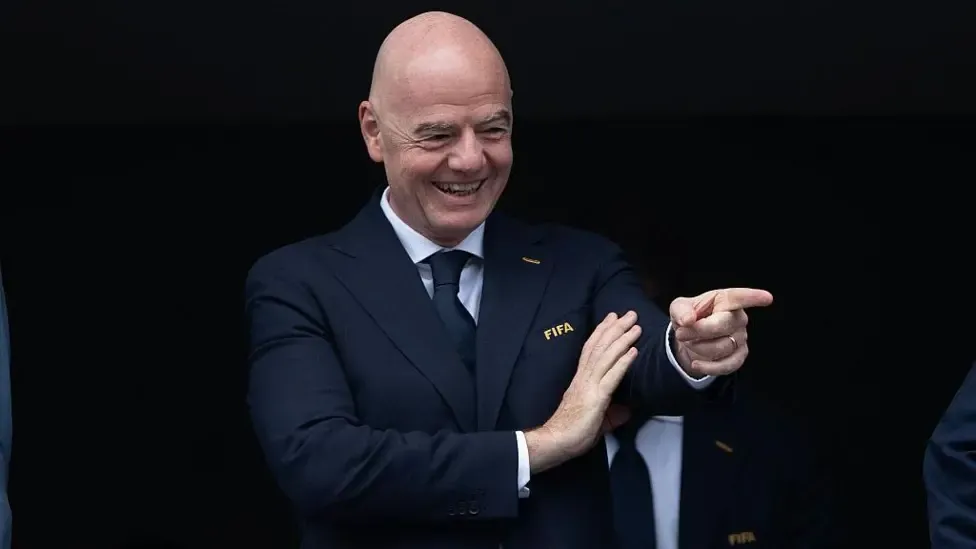
There have been discussions regarding a potential further expansion of the World Cup to 64 teams. Gianni Infantino, the FIFA president, has indicated an openness to this idea, suggesting it could provide smaller countries with more opportunities to participate and improve. The current format for the 2026 World Cup, which is already expanded, involves 48 teams.
CONMEBOL, the South American confederation, has actively sought more games and, in April 2025, requested a one-off tournament of 64 teams. Alejandro Dominguez, the president of CONMEBOL, expressed that such an expansion would ensure “nobody on the planet is left out of the party.” He reiterated this desire after the conclusion of the 2026 tournament, stating that CONMEBOL was “working to ensure that the 2030 World Cup features 64 teams.”
However, this proposed expansion has met with limited support from other confederations. UEFA president Aleksander Ceferin dismissed it as a “bad idea” for both the tournament and the qualifying process. Victor Montagliani, president of Concacaf, stated last year that it would damage “the broader football ecosystem,” a sentiment echoed by AFC president Sheikh Salman bin Ibrahim Al Khalifa, who warned that further expansion could bring “chaos.”
Despite these concerns, the decision on any further expansion would ultimately rest with the 37 members of the FIFA Council. Proponents of a 64-team tournament highlight a more natural format and increased opportunities for emerging nations, citing examples like Cape Verde’s performance in the 2026 World Cup where they drew with Spain and Uruguay and took Argentina to extra time in the last 16.
Logistical challenges for a 64-team tournament would include the need for more host cities, stadiums, and elite-level training facilities, as well as extensive infrastructure for fan accommodation and movement. The 2026 tournament lasted 39 days, and an additional 24 matches for a 64-team format would require an extra 20 schedule slots, potentially adding five days to the competition. The final of the 2030 FIFA World Cup is scheduled for July 21, 2030.
Read Also
Source: vanguardngr.com

