Morocco to host Women’s Africa Cup of Nations as Nigeria defends title

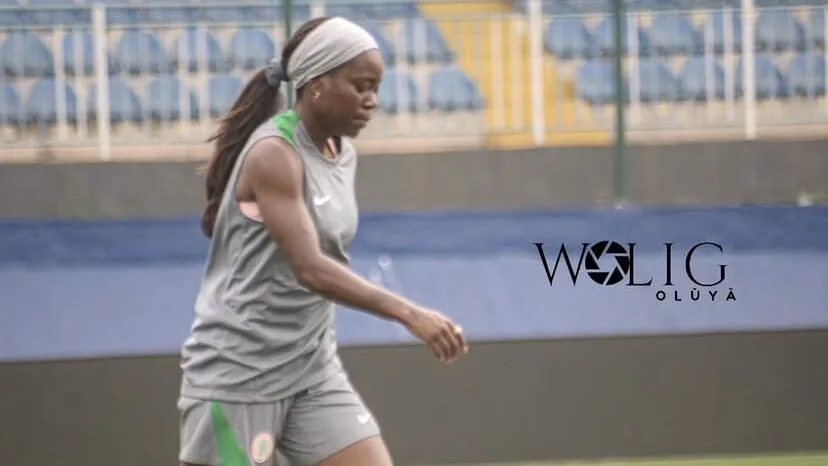
Nigeria’s historical dominance
The Women’s Africa Cup of Nations (WAFCON) has grown significantly since its beginning in 1991. What started as a modest competition has become a major sporting event on the continent, showcasing players like Asisat Oshoala, Perpetua Nkwocha, and Barbra Banda. The Super Falcons of Nigeria have consistently demonstrated their strength in African women’s football.
When the Confederation of African Football (CAF) introduced the Women’s African Championship in 1991, Nigeria emerged as the first champions, defeating Cameroon. They successfully retained their title four years later by beating South Africa. The competition transitioned to a tournament format in 1998, with Nigeria hosting the finals. This change did not hinder the Super Falcons’ dominance, as they won the inaugural tournament-style championship and continued to secure titles until 2006, establishing a significant legacy in African sports.
This success was built on generations of skilled players, including legends such as Mercy Akide, Florence Omagbemi, Nkwocha, Rita Nwadike, Stella Mbachu, and Cynthia Uwak. Later, players like Oshoala, Desire Oparanozie, and Onome Ebi continued to uphold Nigeria’s leading position in African women’s football.
Emergence of new contenders
After nearly two decades of Nigeria’s control, the landscape of the tournament began to shift in 2008. Host nation Equatorial Guinea achieved a notable victory against South Africa in the final, becoming the first country other than Nigeria to win the continental title. This triumph was a significant moment for women’s football in Africa, indicating that the Super Falcons were no longer unchallenged.
Equatorial Guinea further solidified their achievement in 2012 with a victory over South Africa in the final, making them the second nation to lift the trophy. While there were discussions regarding player eligibility during that period, their wins are recorded in WAFCON history and highlighted the increasing competition across the continent.
Nigeria responded by reclaiming the title in 2010 and continued their winning streak with further triumphs in 2014, 2016, and 2018. During this time, coaches found that combining experienced leaders with emerging talent helped maintain Nigeria’s status despite growing opposition. The 2018 final in Ghana was particularly dramatic, with Nigeria winning a penalty shootout against South Africa after a goalless draw, securing their 11th title.
South Africa, having been runners-up multiple times, finally achieved their goal in 2022. Under coach Desiree Ellis, Banyana Banyana defeated hosts Morocco in Rabat to win their first WAFCON title. This victory was seen as a result of sustained investment in women’s football and demonstrated the closing gap between traditional powerhouses and emerging teams in Africa.
Although Morocco did not win the 2022 final, their journey to the championship match captured significant attention. With considerable investment from the Royal Moroccan Football Federation, Morocco has quickly become a prominent nation in African women’s football. Their consistent advancement in major tournaments suggests a growing competitiveness within WAFCON, indicating that the list of champions may expand in the future.
2026 tournament and future prospects
The 2026 Women’s Africa Cup of Nations officially began on July 26 in Morocco, featuring 16 nations. The tournament, which runs until August 16, is being held across five stadiums in Rabat and Casablanca. Beyond regional glory, teams are also competing for direct qualification to the 2027 FIFA Women’s World Cup in Brazil.
Nigeria, the defending champions, are in Group C alongside Zambia, Egypt, and tournament debutants Malawi. Head coach Justin Madugu has assembled a team that combines experienced players with new talent, including goalkeeper Chiamaka Nnadozie and captain Rasheedat Ajibade, with attacking options such as Asisat Oshoala, Chinwendu Ihezuo, Esther Okoronkwo, and Folashade Ijamilusi.
The Super Falcons are scheduled to start their title defense on Tuesday, July 27, against Malawi. A significant match is anticipated on July 31 against Zambia, a team featuring players like Barbra Banda and Racheal Kundananji. Nigeria will conclude their group stage matches against Egypt on August 4.
Midfielder Toni Payne has expressed the team’s determination to retain their title, acknowledging the pressure that comes with Nigeria’s reputation as the “Giants of Africa.” She noted that the quality of women’s football across Africa has improved, with nations like Morocco, South Africa, Zambia, and Ghana investing in player development. The CAF has increased the total prize fund to $5.8 million for the tournament, with the champions set to receive $2 million.
The four teams that reach the semi-finals will automatically qualify for the 2027 World Cup, while the four losing quarter-finalists will compete for two additional spots in intercontinental playoffs. The knockout stage is set to begin on August 8, leading to the final on August 16.
| Year | Host | Champions | Runner-Up |
|---|---|---|---|
| 1998 | Nigeria | Nigeria | Ghana |
| 2000 | South Africa | Nigeria | South Africa |
| 2002 | Nigeria | Nigeria | Ghana |
| 2004 | South Africa | Nigeria | Cameroon |
| 2006 | Nigeria | Nigeria | Ghana |
| 2008 | Equatorial Guinea | Equatorial Guinea | South Africa |
| 2010 | South Africa | Nigeria | Equatorial Guinea |
| 2012 | Equatorial Guinea | Equatorial Guinea | South Africa |
| 2014 | Namibia | Nigeria | Cameroon |
| 2016 | Cameroon | Nigeria | Cameroon |
| 2018 | Ghana | Nigeria | South Africa |
| 2022 | Morocco | South Africa | Morocco |
| 2024 | Morocco | Nigeria | Morocco |
| 2026 | Morocco | — | — |
The tournament’s history shows Nigeria with 10 titles, Equatorial Guinea with 2 titles, and South Africa with 1 title. Only three nations have lifted the WAFCON trophy since its inception.
Read Also
Source: channelstv.com

