FIFA president discusses potential 64-team World Cup after 2026 tournament

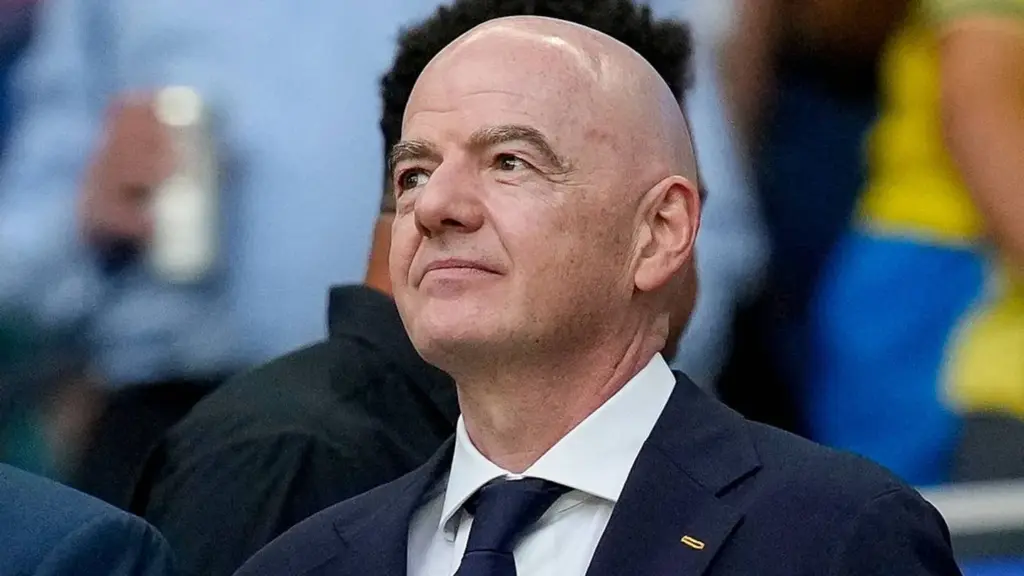
FIFA President Gianni Infantino has indicated that the possibility of expanding the men’s World Cup to 64 teams will be evaluated following the 2026 tournament. Infantino stated that the event needs to be inclusive for the entire world, not just Europe and South America.
The current 2026 edition marks the first time the tournament features 48 teams, an increase from the 32-team format that was in place from 1998 through 2022. Infantino has described the 48-team format as a “huge success,” noting that teams from every continent scored goals and earned at least one point. He also highlighted that nine out of 10 African teams progressed to the knockout stages, compared to only five African teams in the previous World Cup.
Infantino believes that giving smaller countries the chance to participate in the World Cup provides an incentive for them to continue improving. He emphasized that the quality of teams globally is consistently rising.
Discussions on Expansion and Hosting Challenges
The idea of a 64-team World Cup was formally proposed by the South American governing body Conmebol. This proposal suggests that an expanded tournament could see each of the South American nations involved in the 2030 hosting duties potentially host a four-team group, rather than just one match.
However, the concept of further expansion has met with opposition from some football officials. UEFA president Aleksander Ceferin has called the 64-team proposal a “bad idea,” citing concerns for both the tournament itself and the qualification process. Similarly, Asian Football Confederation (AFC) president Sheikh Salman bin Ibrahim Al Khalifa warned that further expansion could lead to “chaos.” Victor Montagliani, president of Concacaf, also expressed reservations, stating that the expansion “doesn’t feel right” and could harm the broader football ecosystem.
Hosting an expanded tournament presents significant logistical challenges. The 2026 World Cup is being held across three countries, and the 2030 edition will involve six nations: Morocco, Portugal, and Spain as main hosts, with Argentina, Uruguay, and Paraguay hosting the three opening matches to commemorate the competition’s centenary. The first World Cup was hosted by Uruguay in 1930. The increased number of teams means more games, which necessitates more venues and infrastructure.
Potential Benefits and Future Considerations
Despite the challenges, a 64-team World Cup could offer several benefits. It would allow nearly a third of the 211 FIFA-affiliated countries to qualify, providing more nations with the opportunity to compete on the global stage. This expansion is also seen as a way to generate more revenue, which would then be distributed among member associations.
When Gianni Infantino was first elected in 2016, his manifesto included increasing the World Cup from 32 to 40 teams. This was later approved to 48 teams, effective from the 2026 finals. The discussion around a 64-team tournament suggests a continued interest in growing the competition. While the FIFA council would make the ultimate decision on any further expansion, there are currently no indications that such a change is imminent.
The potential for a 64-team World Cup will be examined and discussed in relevant committees after the conclusion of the current World Cup.
Read Also
- Argentina defeats Switzerland 3-1 in extra time to advance to World Cup semi-final
- Kansas City: Breel Embolo sent off in World Cup quarter-final due to mistaken identity rule
- World Cup 2026: Messi and Mbappe lead top scorer race as Bellingham joins contenders
- Super Eagles goalkeeper Stanley Nwabali returns to Chippa United
Source: bbc.com

